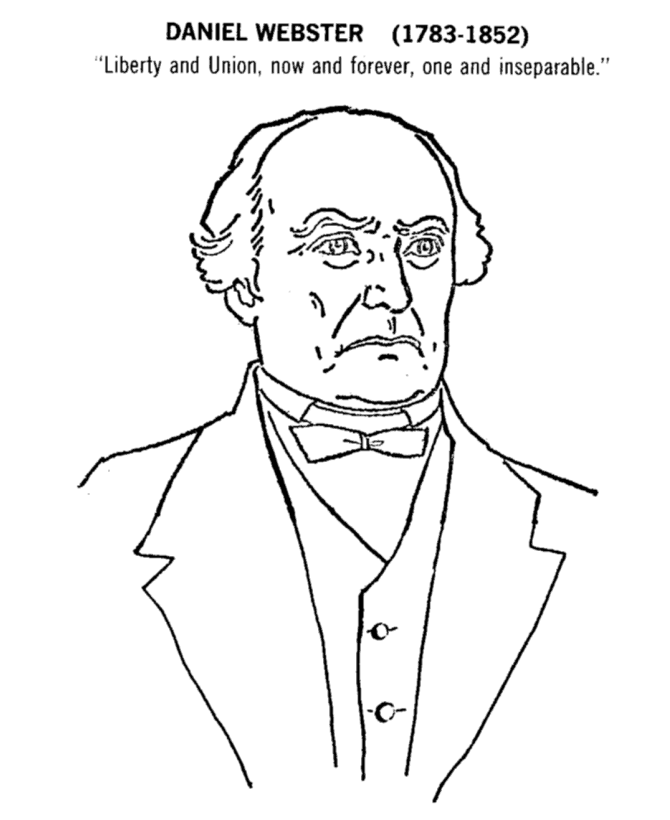
Daniel Webster was a leading American statesman during the nation's Antebellum Period. He first rose to regional prominence through
his defense of New England shipping interests. His increasingly nationalistic views and the effectiveness with which he articulated
them led Webster to become one of the most famous orators and influential Whig leaders of the Second Party System.
Following his victory in 1840, President Harrison appointed Webster to the post of Secretary of State in 1841, a post he retained under
President John Tyler after the death of Harrison a month after his inauguration. In September 1841, an internal division amongst the
Whigs over the question of the National Bank caused all the Whigs (except Webster who was in Europe at the time) to resign from Tyler's cabinet.
In 1842, he was the architect of the Webster-Ashburton Treaty, which resolved the Caroline Affair, established the definitive Eastern
border between the United States and Canada (Maine and New Brunswick), and signaled a definite and lasting peace between the United States
and Britain.
Historical / Biographical information courtesy of Wikipedia.